
Epilepsy has shaped both my education and my career, from a home-schooled junior year to driving limits and workplace accommodations. Its effects vary widely from person to person, but even when seizures are well controlled, they often reach into classrooms and workplaces in ways that are easy to overlook.
Key Takeaways
Accommodations are often what make success possible
Moving to university or starting a new job can mean starting the documentation process over, since they may require new evaluations before granting accommodations
Disclosure is a personal decision, but transparency can be advantageous
Driving restrictions can shape career choices
You are not alone. Many people with epilepsy share these experiences, and self-advocacy, supportive institutions, and awareness make a lasting difference
Disclaimer: These are my personal experiences, not medical advice. Please talk to your neurologist about your own situation.
Academic Impact of Epilepsy
Seizures, recovery, medication side-effects, fatigue, memory difficulties, and concentration challenges can all interfere with academic progression. In terms of standardized testing, I faced time constraints and anxiety due to my epilepsy which challenged me to finish most tests on time.
School attendance can also be impacted by seizures, hospitalizations, medical appointments, recovery periods, and missed classroom time. For example, when I was taking Keppra (an anti-seizure medication), I had serious depression and was home-schooled my junior year of high school which had a profound impact on my academic and social life that year.
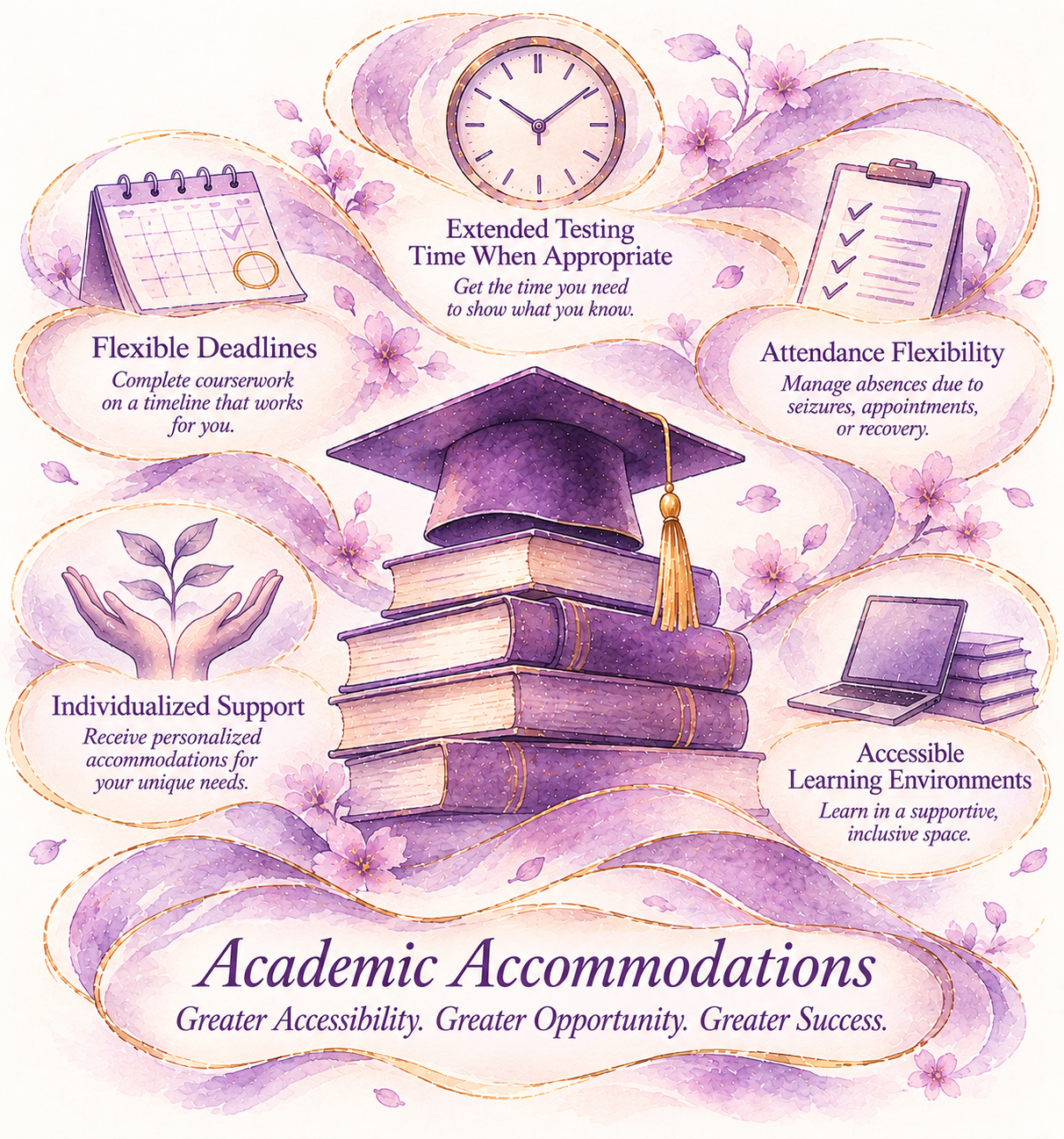
Academic accommodations (detailed section below) are important for individualized support, flexible deadlines, extended testing time when appropriate, and accessible learning environments. I was accommodated mostly for my tests and attendance (if a seizure occurred or doctor’s/hospital appointments). Looking back on it today, I’d say that these accommodations were the most impactful element of my academic success.
Another element of one’s academic life impacted by epilepsy is the social and extracurricular experiences. Epilepsy can influence participation in sports, clubs, field trips, and other educational opportunities. It was early mornings for soccer on the weekend so if I had a seizure or sensed auras, I would miss my games.
Epilepsy also has a great impact on navigating higher education like university, such as balancing the demanding academic schedules and living more independently. Currently, the RISE act is moving through congress to make it a federal law that would let students use prior documentation instead of being re-evaluated for university accommodations.
Professional Impact of Epilepsy
Epilepsy can limit employment opportunities due to seizure frequency, seizure triggers, medication side effects, driving restrictions, and safety considerations. For instance, before my two brain surgeries, I was unable to drive due to my epilepsy. As a result, I could only take jobs within range of my parents’ home to be dropped off and picked up.
Even after being hired, I worried, and still do today, about how my performance compares to my colleagues’. Brain fog from seizures, medication side effects, recovery time, and frequent medical appointments have all affected my productivity in the past. I’ve always feared being seen as unreliable or incapable. The financial strain adds to that: reduced working hours, medical expenses, insurance concerns, and interruptions to career growth. Many people with epilepsy share these fears, you are not alone.
There’s also the personal decision of whether, when, and how to disclose epilepsy to employers and colleagues. I am as transparent as possible, I believe transparency is key. I will always be proud to say that I have a disability on job applications through voluntary self-identification. It helps my employer and me understand each other and plan accommodations, and it shows me early whether or not a workplace will be supportive, which is a major factor in whether I stay long-term.
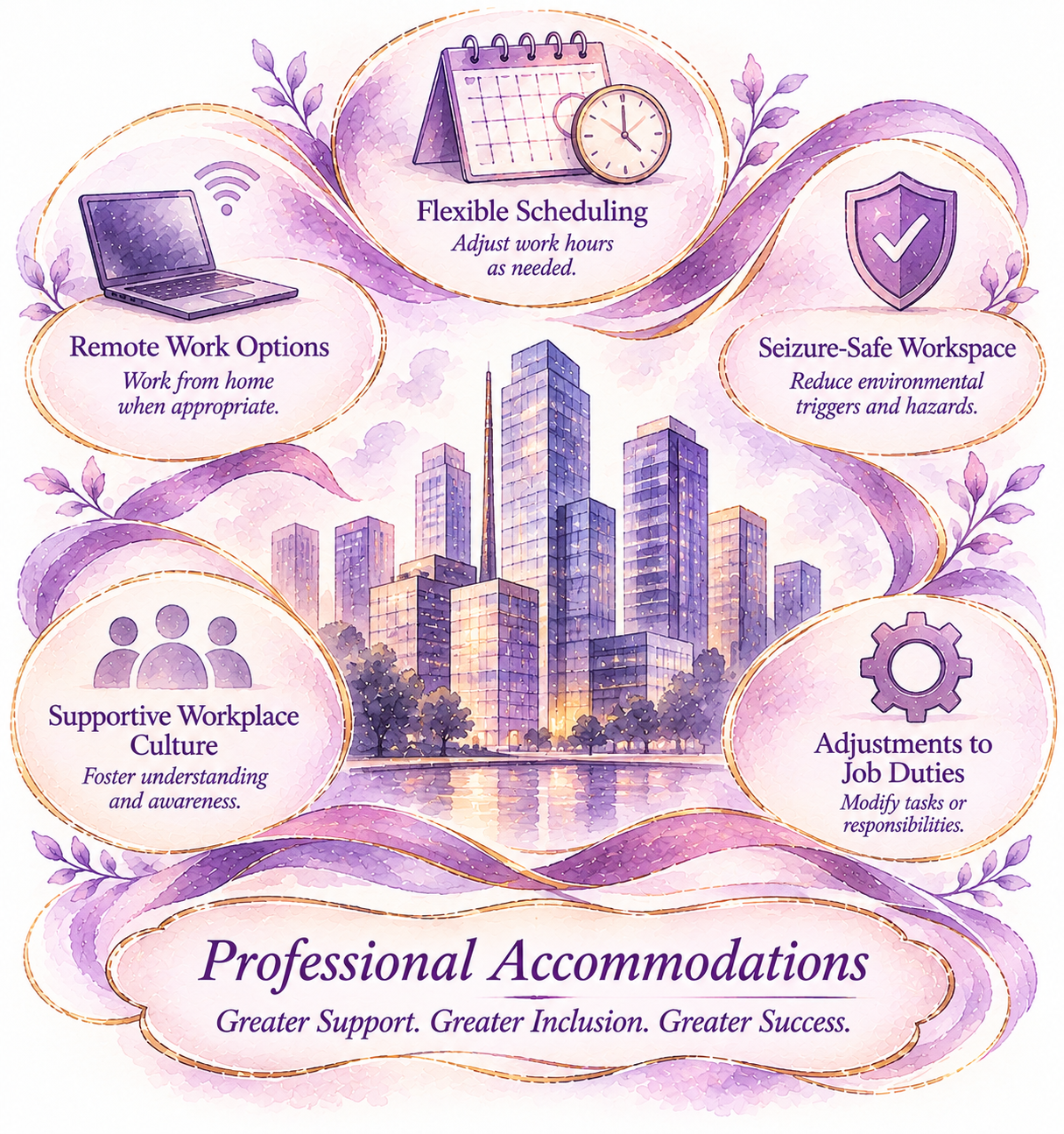
Common workplace accommodations include flexible schedules, additional/extended breaks, seizure action plans, and reasonable adjustments to job responsibilities. For instance, my current employer offered accommodating my break periods from 10 minutes to 20 minutes so my brain could rest from the rather intense work environment.
Know Your Rights and Accommodations
Based in the USA…
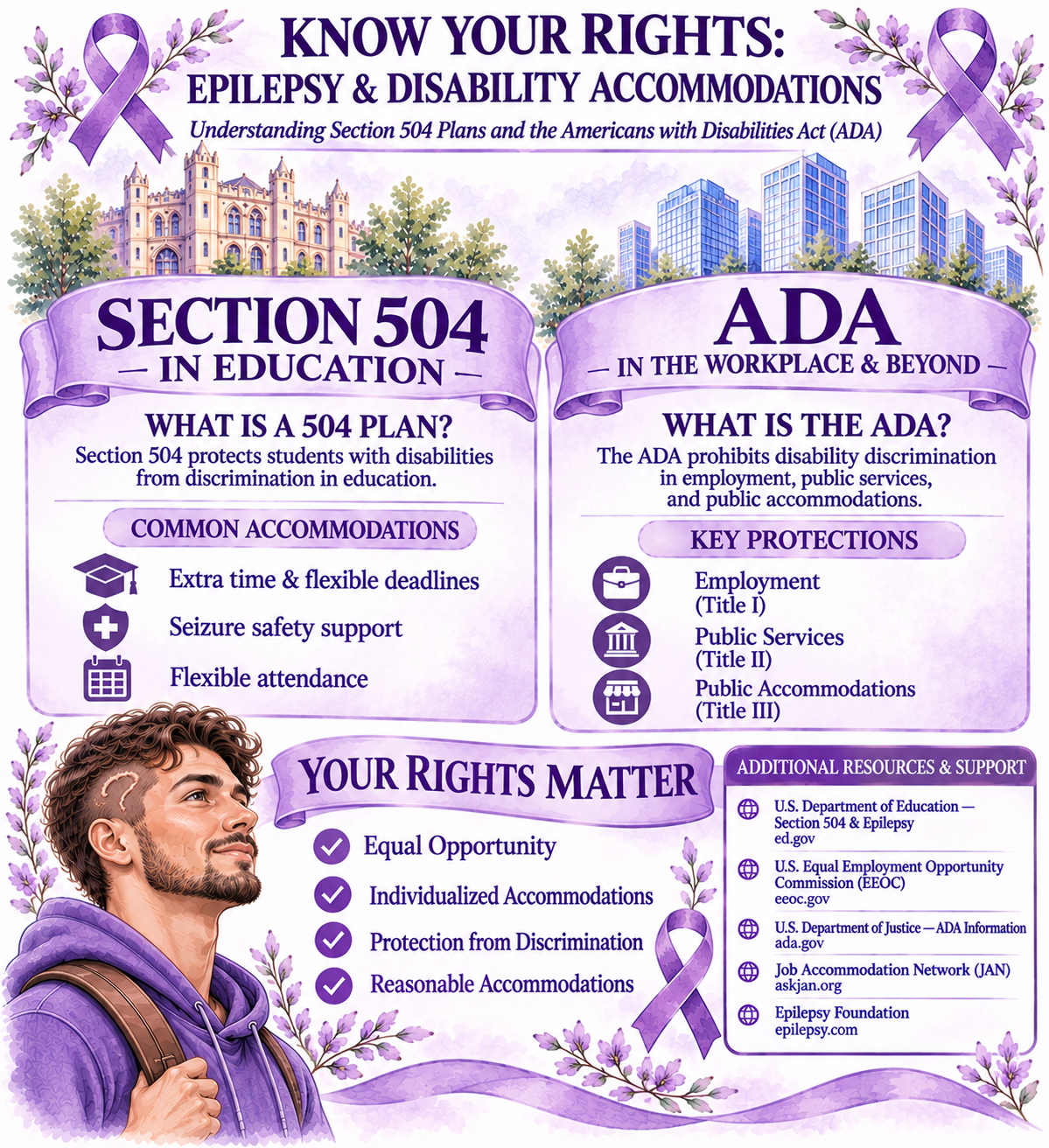
The Americans with Disabilities Act (ADA).
Section 504 of the Rehabilitation Act.
Educational accommodations and individualized support.
Reasonable workplace accommodations.
Tips
Self-advocate and decide on your own terms how open to be. For me, transparency has led to better support and shown me which workplaces were right for me.
Understand personal limitations without abandoning ambitions.
Find supportive educators, mentors, employers, and colleagues.
Create inclusive academic environments and workplaces.